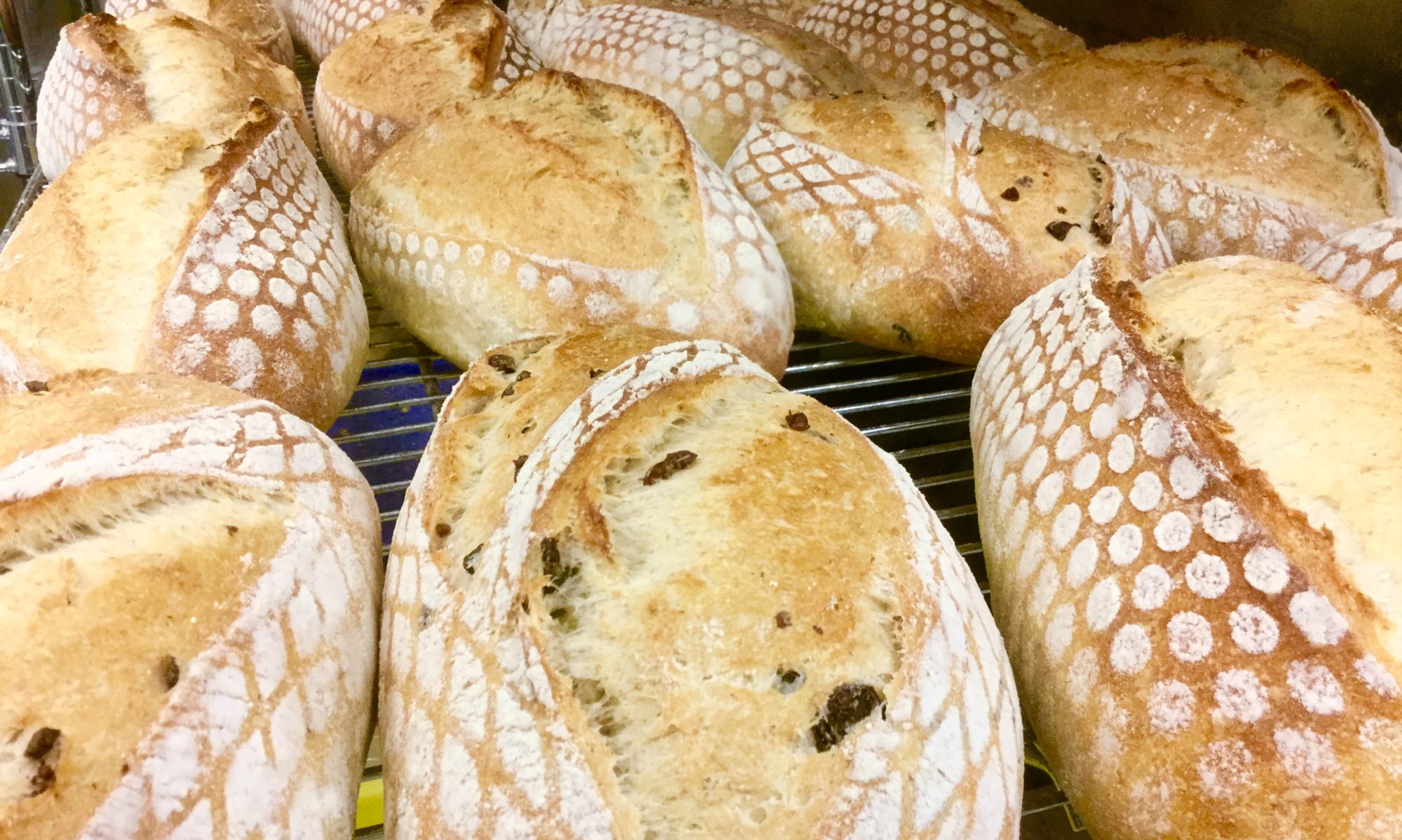

Once you’re ready to make actual bread from your starter, which means it’s doubling or tripling in 3 to 8 hours, you’ll want to bump up the amount of starter you have.
For this lesson, we’ll assume that your main or “Mother” starter is active and you’ve seen it double or triple in size after each feed for about two weeks – in other words, you’re confident it’s good, strong and active – and now store it in the fridge and feed it once a week (or will do so next).
Just as a good example:
Let’s say you’re making the Wild Yeast Blog’s Norwich Sourdough. The recipe wants “360g ripe 100% hydration sourdough starter” but your normal starter is only 150g, so how do you bump it up?
Well, there are two ways to go, both work equally fine so look them over and see which one you would like to use.
Method One: Using the Mother Starter
where you make a big batch using your main or “mother” starter then when it’s all active, you take out 30 grams from your big batch and feed that and continue with regular starter maintenance
Method Two: Starting OFF the Mother
where you take some of your Mother (what you’d discard from a normal feed would do) and use that to start basically a new batch and build it up to 360g while you keep feeding your Mother in it’s own jar separately.
Either way will work so use whichever you want.
Let’s say you want to make bread on Sunday, you’d take your starter out of the fridge on Friday so we have time for the dough to rise nice and slowly.
We’re going to get a fairly large bowl and make our 360g or so of starter, so the bowl needs to be big enough to hold that when it’s doubled or tripled.
Method One:
So in that bowl we’ll throw in the whole jar of starter but this time we don’t throw any out, we just add the flour and water we’ll need to make 360g the recipe wants PLUS 30g more for our next jar of Mother as well which is 390g all together. So let’s just round it up to 400g. IMPORTANT: Don’t throw this whole lot into the bread once it ‘s time for that, you must keep some to put back in your Mother jar!
Because we want this starter to be 100% hydration, we want to add the same amount of flour and water by weight. Now we already have about 150g of the original mother starter so we need to add 400 -150 = 250g of flour and water or 125g of each. Just as you’d do for regular starter except bigger, you add your 125g of lukewarm 85º water to the old starter and whisk it up, then add 125g of flour to this paste and stir it.
Method Two:
We’re going to feed the Mother starter just like we would each week but instead of throwing the excess away or into the pancake pot, we’ll use it to make the 360g of starter for the recipe. Since the Mother is 150g and we keep 30g for the next feed, we usually remove 120g. We want a total or 360g so we need to add 240g of feed or 120g each water and flour. We also do the normal 30-60-60 feed to the mother and send her back into the fridge until next week. We don’t have to worry about forgetting to put her back later.
So now we’re pretty much at the same point for both methods except one has the Mother in it, the other has the Mother in the fridge.
From here, we just set our bowl in a warm spot that’s about 85ºF. Cover the bowl with plastic (what’s really handy is a plastic shower cap) and let it do it’s thing overnight. In the morning, it should have doubled or tripled and maybe even started to deflate a bit. It’s ready to get mixed with the rest fo teh recipe ingredients.
At this point, with the Norfolk recipe, you can go with a couple of short 2.5 hr rises or slow rises in the fridge. What’s the diff? With the short time, the bacteria which produce the acid tones make enough to keep the environment acid enough for the yeast and help it rise. But if you cool it all down and slow the process, the yeast goes to sleep a bit while the bacteria still makes the acid, which is what gives the bread the distinct “San Francisco Sourdough” tang. This takes 8, 10 or even 16 hours, so decide if you want less tangy bread soon or more tangy bread later.
Since you may be doing the full recipe you could do BOTH: half of the dough gets mixed and baked today, the other half goes into slow motion in the fridge and bakes tomorrow. Then you can see how each method tastes and make whichever bread you like.
NOTE: Sourdough bread should be left to cool for a while after it comes out of the oven so it can develop it’s flavour. In fact it tastes “more” on day two or three. So if you have some while it’s still warm, it will not be as “tasty” as it will get later. It will be tasty, just not “as” tasty.
But it’s usually impossible to wait.
hi there i made my starter for the first time this week been feeding it every day like i was supposed to ,. made a loaf of bread today and put some mix back in to bowl to restart
it came out very heavy when baked, very pale brown crust but nice and crusty, it tastes not to bad , but its quite heavy and i was wondering what i had done wrong ….. if i had not kneaded it enough or if i had used the wrong kind of flour i just used plain flour , i didnt use a strong flour would that make a difference??
Thanks Tessa
If the starter is just a week old from when you got it first mixed up, it’s very possible it’s not at all ready yet. At about day three or four, you typically see a little bubble action in your mix and get a small amount of rise but that is usually other bacteria in your flour soup feeding on the goodies in there. They’ll bubble but soon die off. A while later your real yeasties and lacto bacteria – the ones you really want – start taking the neighborhood back from the other beasties, eventually setting up a symbiotic relationship that’s generally unfriendly to other bacteria. The lacto produces an acid environment that the good yeast enjoy, the yeasts produce by-product that the lactos use. The acidic environment is perfect for the yeast but too acidic for most other bacteria, keeping them out of your starter.
The bottom line is your starter should be doubling with each feed in about 4 to 6 hours, maybe even less depending on temperature. Keep feeding your starter twice daily for a full two weeks, even if it’s reaching double size regularly. This assures that your colony is vibrant and strong. At the two week mark (if your getting consistent doubling) you can put your starter in the fridge and feed only once a week or whenever you make bread.
You also need to get your culture “aged” so that it has developed it’s own characteristic flavour.This point is normally about 2 months down the road, although if it’s rising dependably each feed at the two week point, you can certainly use it to rise your bread, it just won’t have reached it’s best level of flavour yet. It’ll still be tasty but not it’s fully developed character.
Hope this helps.